home
Historic Writing Supplies and Hand-Forged Cutlery
From our family to yours!

Historic Iron Gall ink, 1 oz. or 4 oz.
Designed for Dip Pen and Quill
Our Iron gall ink is made by using a fermentation method to yield a blacker and smoother ink, with proper proportions of iron salts and tannic and gallic acids, while still using only medieval ingredients and techniques. This formula has been developed over the last 17 years through research, testing, and chemical calculations. Although it works well on paper, it is tuned specifically for parchment so that it will soak in slightly and chemically bond to the animal skin to create a long lasting, waterproof ink.
This ink typically goes on dark gray and darkens to a pitch black as you write with it. The darkening process can continue for up to a week and typically the ink will be water proof after that same week has passed. This is the same formula and ink that our scribe and illuminator uses for all of his text and line drawing.

Wax tablets were used from ancient Roman and Greek times thru the renaissance for everything from art design to industry records and inventory.
This tablet measures 3.5 x 4.5 inches and is a representative example of the tablets we make, since they are hand made from natural materials please expect some variation (difference in wood grain from the one pictured, different colored leather, etc.) from tablet to tablet. The tablet pictured here comes with a wooden stylus, but a metal stylus is also an option (it is what we prefer).

The Design and Process of the Original Manuscript
The original piece is modeled after manuscript pages found in the St. Alban’s Psalter from the 12th century. The manuscript original uses the same materials and techniques as would have been found in a 12th century psalter from the British Isles. It stylistically depicts the annunciation of the birth of Jesus to Mary by the angel Gabriel. The designs are each drawn, inked with handmade iron gall ink, then paint and size is laid down before gilding with 23+ karat gold and painted with egg tempera paint that is handmade with historic pigments, including vermillion, white lead, azurite, various earths and ochers, lampblack, Naples yellow, and malachite. All of this on goatskin parchment.
The Folded Cards
This is a 10 pack of folded cards that are digital reproductions of the original piece. Each card is 5x7 inches, linen textured, and comes with a matching envelope. Our prints are produced using Epson Claria inks.

The Design and Process
Each of these pieces is a double page layout from the illuminated copy of Song of Songs. Each layout contains a miniature of a famous woman or couple from the Hebrew Bible. Each one uses components from multiple manuscripts. The designs are each drawn, inked with handmade iron gall ink, then gesso is laid down before gilding with 23+ karat gold and painted with egg tempera paint that is handmade with historic pigments, including vermillion, white lead, lapis/ultramarine, various earths and ochers, lampblack, and minium. All of this is on calfskin parchment.
The Prints
Each print is 4x6 inches and is matted to fit in an 8x10 inch frame. Our prints are produced using Epson Claria inks.


First the the parchment is cut, guidelines and margins are marked (drawn with a lead stylus or pressed in with a bronzed stylus or penned with brazilwood ink)
………………………………
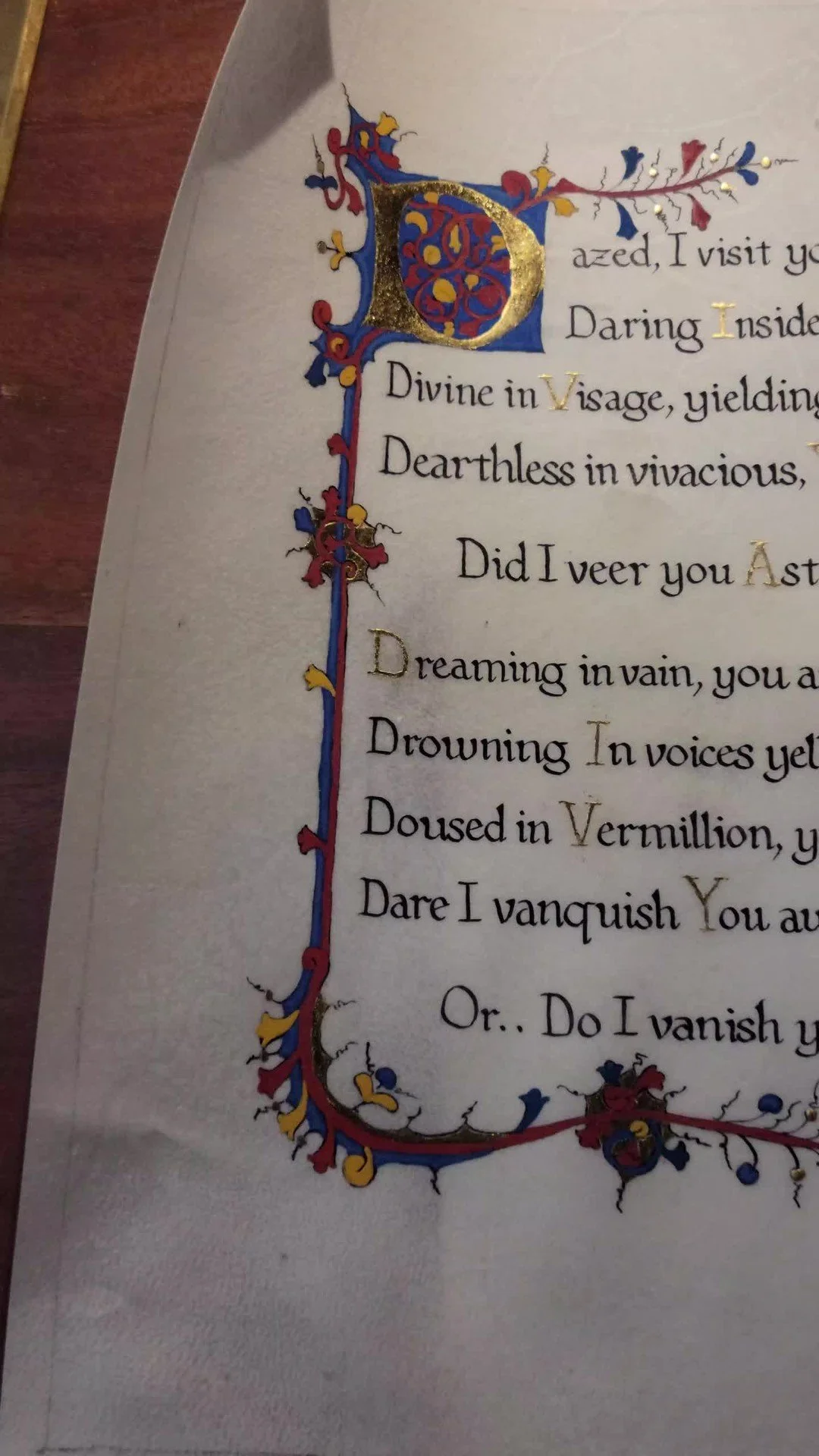
It is now a completed page, here is an image showing the detail of the historiated initial. The entire page is 9x11 inches, which is quite large for a historic manuscript.
Well, let’s go through this a step at a time.
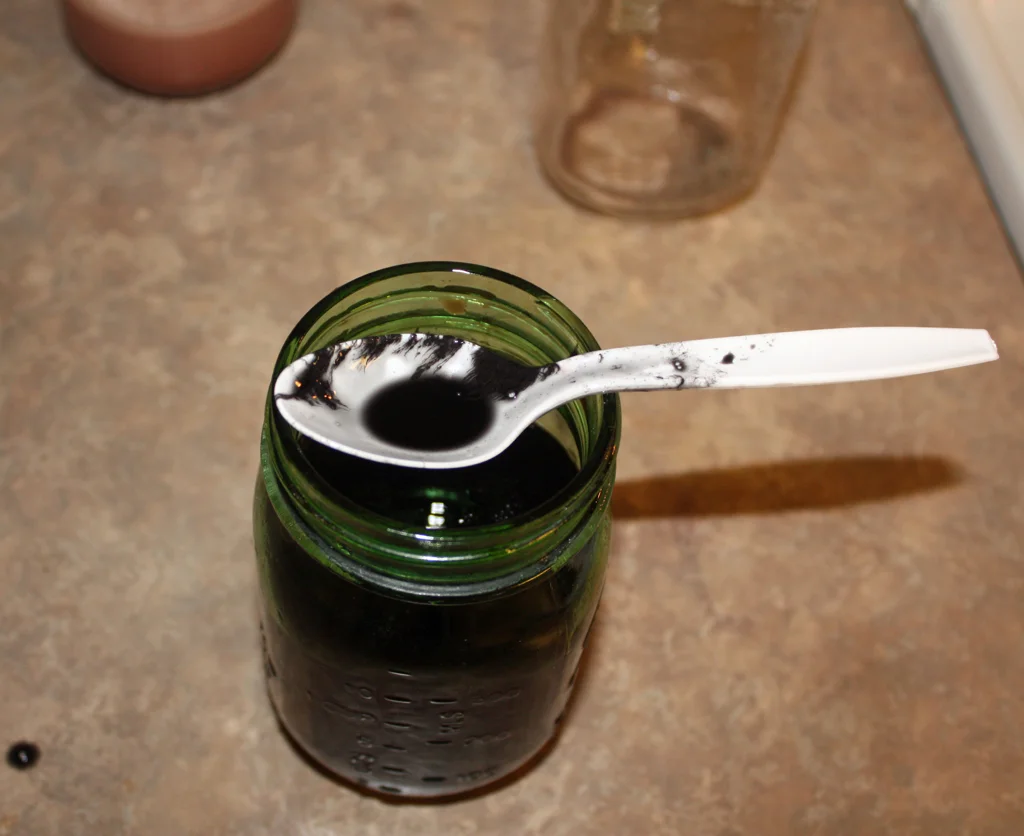
You need to gather all of your materials, to get oak galls, iron(II) sulfate, and gum Arabic, I recommend buying the iron gall ink making kit from us.
………….
Stir this all together thoroughly and you have made ink. I like to filter it once more through the filter cloth after I have made the ink to get any large clumps out. (this part is extremely messy and not entirely necessary, but it helps smooth out the ink concistency)

It isn’t exactly eyes of newts and the blood of a dragon stewed together under a waxing gibbous moon or anything, but it doesn’t feel far off from that. And this recipe is one of the most straightforward I know of to our modern “follow this recipe, have success making cupcakes” mentality. Frankly, that wasn’t the mentality in the middle ages and renaissance. The mentality was, “here are some guidelines, take these and everything you learned from your master when you apprenticed” and you will succeed. But enough of the history of technical literature and recipes…



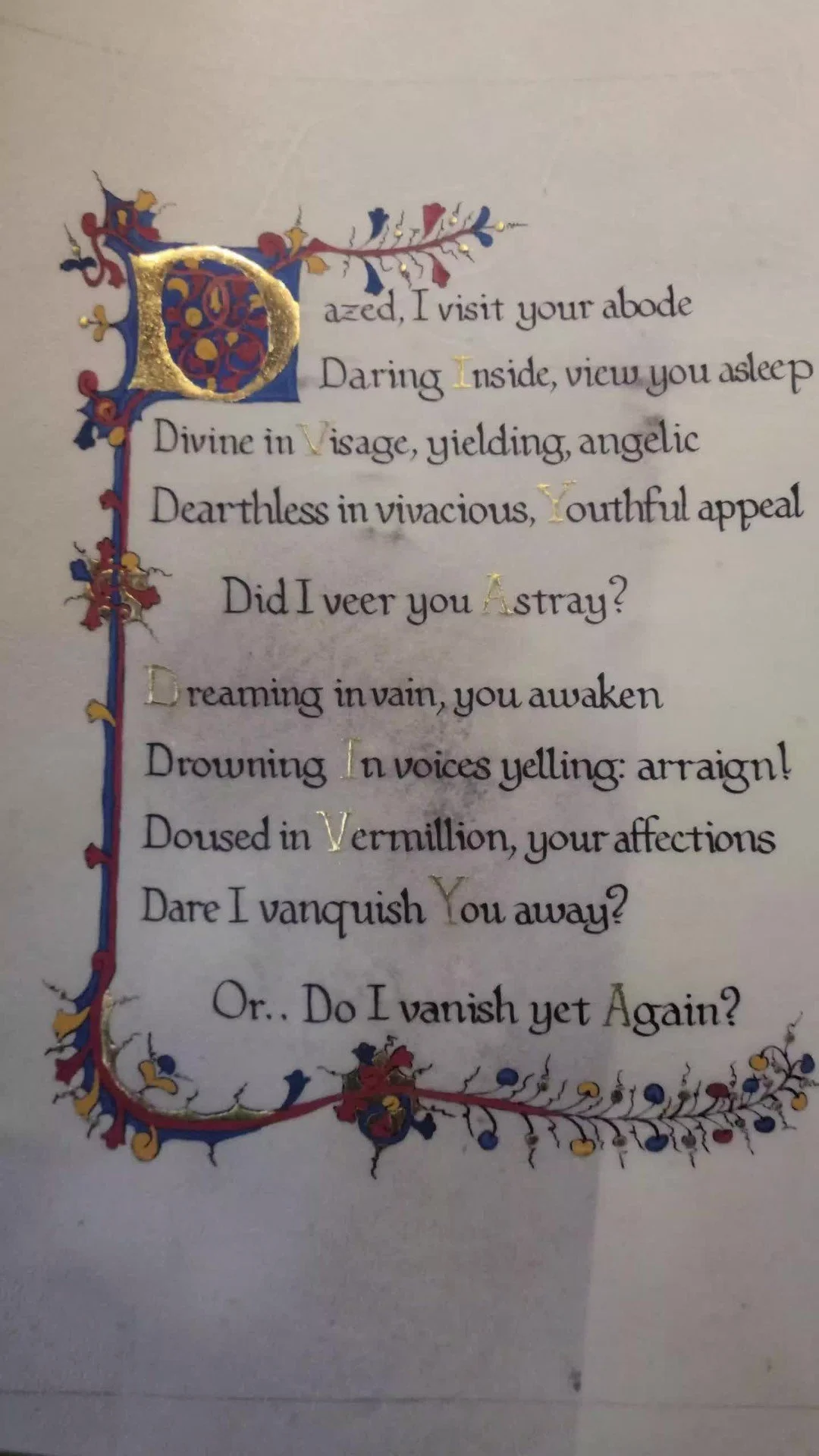
Pining to practice historic writing? Yearning to pen like the monks of yore? Seeking to scribble like a scribe?
Yeah, we totally get that.
That’s why us at Scribal Workshop have put together this medieval and renaissance period writing kit.
The kit contains:
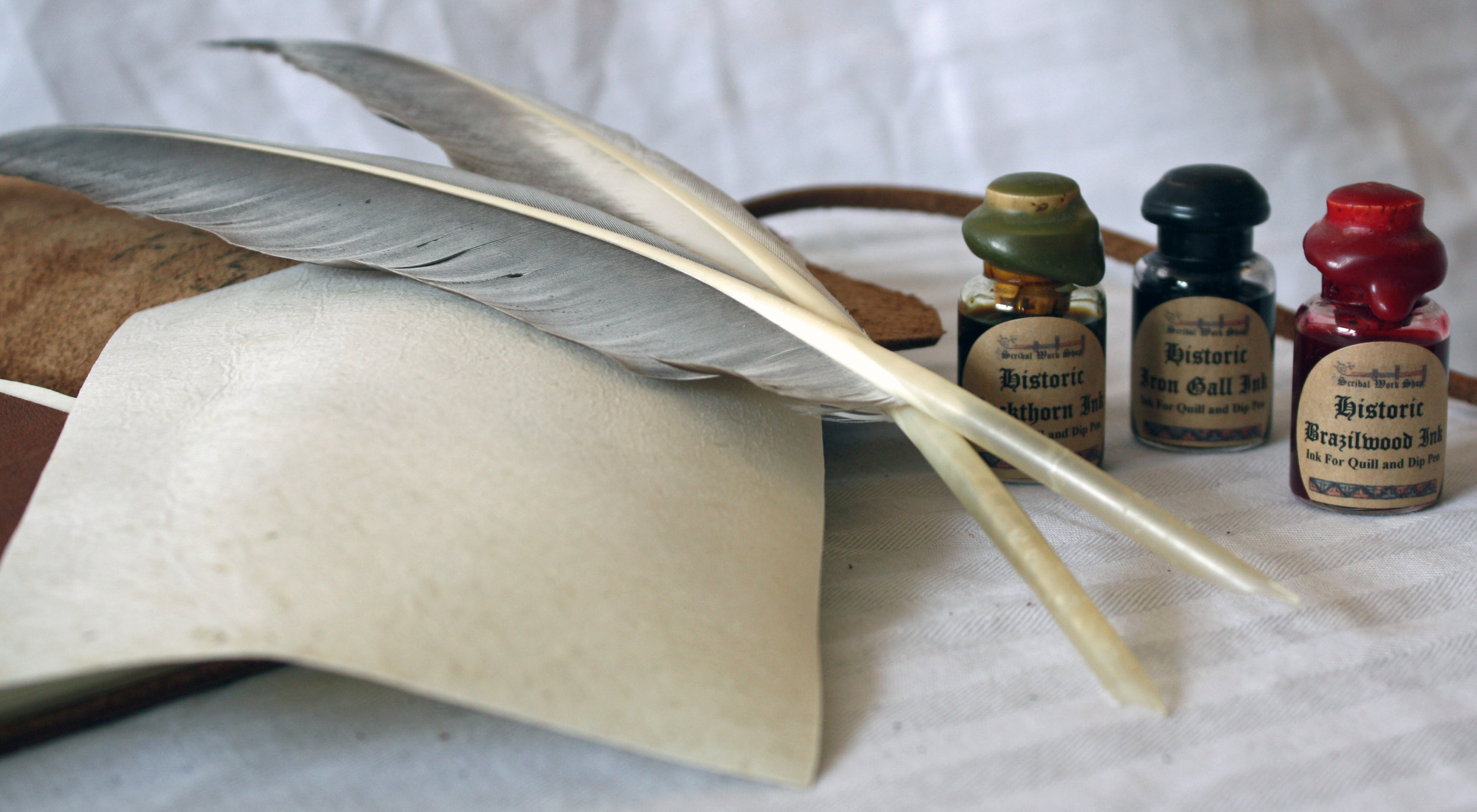
*Three 1/4 oz bottles of historic ink
*Two hand-cut and hardened goose quills
*An instructional pamphlet with extremely interesting nuggets of historic information, including how quills are cut and hardened, how parchment is prepared, and how to write a historic Gothic calligraphy alphabet
The inks are an olive green buckthorn berry ink, a black iron gall/oak gall ink, and a red brazilwood ink. Each of these inks is made using medieval and renaissance period recipes and techniques.
Everything we sell is hand made by us at Scribal Workshop right here in the U.S.A.
Please note: The book & parchment in the picture are not part of the kit– they're just for display.
The 5 ink option also includes our walnut and cochineal inks.